
media
Melina Laboucan-Massimo was born in the Lubicon Cree community of Little Buffalo, in what today is called northern Alberta. Some of her earliest memories include chasing dragonflies through pristine wilderness and protesting with her family against the oil and gas companies that threatened their way of life. Melina spent decades tirelessly advocating for climate justice and indigenous rights, until recently, when the Alberta wildfires left her bedridden and exhausted.


Here’s a pitch for a national project that could bring cheaper power to Canadians, reduce emissions, protect our energy sovereignty and promote Indigenous reconciliation. How about a cross-Canada electricity grid powered by wind and solar? What On Earth’s Indigenous climate solutions columnist, Melina Laboucan-Massimo, is with a delegation in Ottawa making the case for why this project should be a priority for Mark Carney’s government.
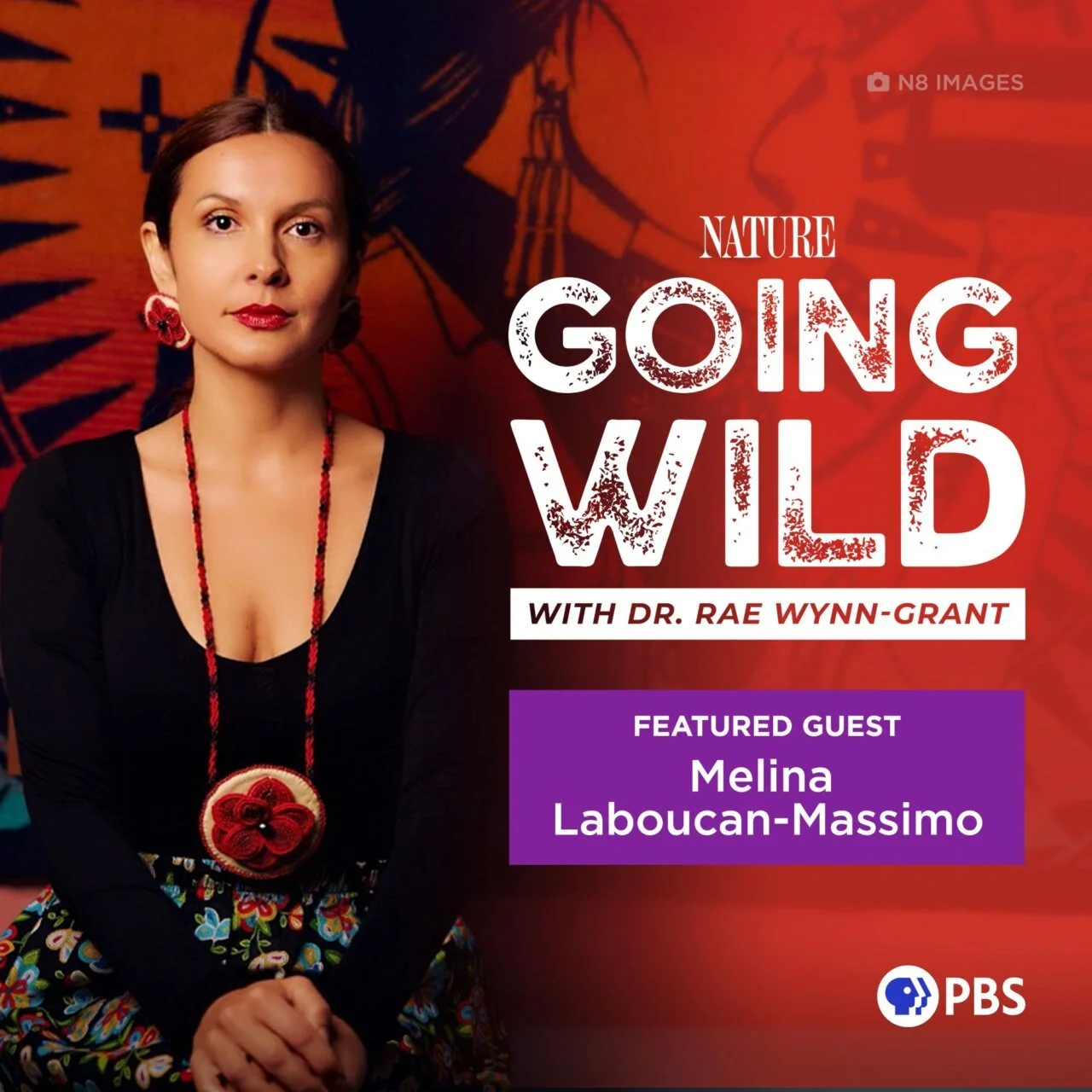
Growing up in her Lubicon Cree community in northern Alberta, Melina Laboucan-Massimo witnessed the destruction of her once-pristine land in the boreal forests for oil. A massive oil spill in Melina’s community became the catalyst to launch an initiative that would bring not only clean energy jobs to her community, but also a vision for a just and equitable transition to renewable energy.
In this episode, Heather Castleden and Melissa Quesnelle talk
with Melina Laboucan-Massimo about activism, Indigenous resurgence, and land defense, all based in love and care for
land and people. Attending her first blockade at age 7, Melina
describes her work not so much as protesting, but as her inheritance.
The Four Sacred Gifts
Dr. Anita Sanchez
The Great Peace with Serena Mendizabal
Episode 12
Highlighting The Great Peace Law, Indigenous grassroots organizer, Serena Mendizabal, discusses preserving and protecting indigenous wisdom and land rights.
italia rai: the story of melina laboucan-massimo
Sacred Earth founder and Indigenous Climate Action co-founder Melina goes in-depth about her homelands and how on-going resource extraction has shaped her identity as an Indigenous woman in so-called Canada with Italian heritage.
RAI, or Radiotelevisione Italiana, is Italy's national public broadcasting company. It's the largest broadcaster in Italy and one of the biggest in Europe, competing with Mediaset and other smaller networks.
At this week’s World Energy Congress in Rotterdam, one of the themes will be clean energy security for First Nations communities. Guest Melina Laboucan-Massimo, Founder and Executive Director of Sacred Earth Solar & Karrina Nolan, Executive Director of Original Power in Australia discuss achievements in advancing Indigenous community energy sovereignty and the struggles working within the current colonial systems.

In this episode, we hear from Melina Laboucan-Massimo, environmental activist and host of APTN’s, Power to the People, . Melina will share her experience growing up in northern Alberta, discussing the barriers communities face in the energy and environmental sector, and help us to understand the correlation between MMIWG2S+ and the fossil fuel industry. To close this heavy discussion, Melina shares her advice on healing justice and a pathway forward.
cnn: United Shades
of America
Host Kamau Bell sits down with Melina Laboucan-Massimo.
ctv the social: An Indigenous Perspective on Climate Change
Founder Melina Laboucan-Massimo joined CTV The Social for Earth day to discuss the climate crisis through an Indigenous lens.

Guest Melina Laboucan-Massimo, a member of the Lubicon Cree, who has for more than a decade been an activist on behalf of indigenous communities that have been impacted by the development of fossil fuels. Her television program, Power to the People, explores the power of clean energy to empower First Nation communities. On this podcast, host Andy Stone and Melina discuss the impacts of fossil fuel development on indigenous communities, and efforts to counter those impacts

What On Earth's Indigenous climate solutions columnist Melina Laboucan-Massimo brings us the story of the Mesgi’g Ugju’s’n wind farm on the Gaspe Bay Peninsula. Melina says it's an example of how Indigenous communities can exercise their land rights and create economic prosperity from renewable energy.
Alongside Wet’suwet’en Hereditary Chief Na’moks, Mark Ruffalo, Meryl Streep, Alex Ebert and Director of Don’t Look Up, Adam McKay, Melina discussed the impacts of financing dirty fossil fuel extraction. These impacts extend from Indigenous communities at the source - the tar sands - to communities all along the pipeline corridor.
JUST Look UP! ALLIANCE LAUNCH
HOPE IN RESISTANCE: STORIES OF CLIMATE JUSTICE
Hope in Resistance features Melina alongside Anjali Appadurai, climate justice lead at Sierra Club BC; and Naisha Khan, co-founder of Banking on a Better Future, in a conversation moderated by Nahlah Ayed (host of Ideas on CBC Radio One).
Climate Justice, Grief, and Action: Intergenerational Dialogue on Climate Change and What’s Next
This curated conversation between long-time activists and scholars and youth in Victoria BC currently working to protect the old growth trees at Fairy Creek and other climate actions explored the difficult terrain of intergenerational climate inequity, climate anxiety and climate action. What are the steps we need to take together to ensure that youth and the planet we all love have a livable future? How do we best incorporate Indigenous ways of knowing?
#NOMOREDIRTYBANKS CAMPAIGN LAUNCH
Melina moderated a panel featuring Wet’suwet’en Hereditary Chief Na’moks, Gidimt’en Spokesperson Sleydo’, West Coast Environmental Law Association Staff Lawyer, Eugene Kung and oscar-nominated actor and activist Mark Ruffalo to launch the #NoMoreDirtyBanks Campaign. Over 65 celebrities are standing with the Wet’suwet’en and impacted Indigenous communities from the tar sands to demand RBC and their subsidiary, City National Bank, divest from the Coastal GasLink pipeline, defund the tar sands, and respect Indigenous rights. Learn more and sign on at: www.NoMoreDirtyBanks.com
Ambitious Lifestyle and Behaviour Changes for Justice, Nature and Climate Webinar
In this webinar, Melina joins Lewis Akenji, Devika Shah, Joanna Kerr and Vanessa Timmer to launch the MakeWay and OneEarth Funder Collaborative on Equitable 1.5 Degree Living in Canada.
stand.earth | The whole world is watching
Indigenous leaders, celebrities and scientists came together to demand urgent action to protect the last old growth forests in British Columbia.
Indigenous perspectives & Approaches to Climate Action
Melina shares a keynote speech with the Centre for Indigenous Research and Community-Led Engagement at the University of Victoria on Indigenous Perspectives and Approaches to Climate Action.
The condor & The Eagle
Four Indigenous leaders embark on an extraordinary trans-continental adventure from the Canadian Boreal forests to deep into the heart of the Amazonian jungle to unite the peoples of North and South America and deepen the meaning of “Climate Justice”. The Condor & The Eagle documentary offers a glimpse into a developing spiritual renaissance as the film four protagonists learn from each other’s long legacy of resistance to colonialism and its extractive economy.
The "Making Care Count: Care Work, Gender, and Covid-19" symposium featured distinguished leaders whose research, policy work, and activism are advancing our understanding of one of the most pressing issues of our times: the care crisis. Introduction by Rebecca Mark, moderated by Krishanti Dharmaraj.
Toward A Post-Covid Future: Feminist Perspectives on Care
solar panels in the path of a pipeline
The Tiny House Warriors are building 10 Tiny Homes in the path of the Kinder Morgan pipeline and with the help of Sacred Earth Solar, recently solarized the first home.
Sacred Earth Solar | Protecting Land is Protecting Women
As part of the Tiny House Warriors project between the Wetsuweten and Sacred Earth, these Indigenous women on the frontlines of land exploitation opposition explore the clear connections between
Built in the heart of Alberta’s Peace River oil sands. In 2015, Sacred Earth Solar (formerly Lubicon Solar) launched the Piitapan Solar Project, a 20.8kW renewable energy installation in Little Buffalo that powers the community health centre. The 80-panel solar project has created more green jobs and reduced the community’s reliance on fossil fuels.
Just Transition Solar in Indigenous Communities - Piitapan Solar Project
REDx Talks - Melina Laboucan-Massimo | VIolence against the earth is violence against women
Melina Laboucan-Massimo, Sacred Earth Solar’s founder, speaks to the REDx Talk’s audience about MMIWG2S, the link between natural resource extraction and violence against Indigenous women and girls, climate justice, the tar sands, and Indigenous rights.
Reimagining our relationships and communities: a conversation with david suzuki and melina laboucan-massimo
Join Melina Laboucan-Massimo and David Suzuki as they converse with the David Suzuki Foundation on reimagining our relationships and communities to create a better world.